

THANK YOU FOR SUBSCRIBING

× 
Education Technology Insights Weekly Brief
Be first to read the latest tech news, Industry Leader's Insights, and CIO interviews of medium and large enterprises exclusively from Education Technology Insights
A featured contribution from Leadership Perspectives: a curated forum reserved for leaders nominated by our subscribers and vetted by the Education Technology Insights Europe Advisory Board.

Florida International University
Putting Students at the Center of STEM Education
Putting the Student at the Center of Learning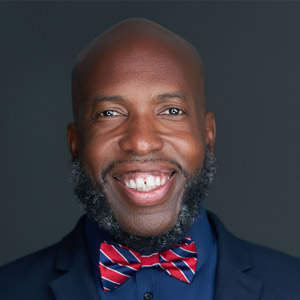
Bryan Dewsbury
From the very beginning, my team and I thought about education as a human development process. So the students, whose individual and collective histories are key to that development, have been and will always be the focus of our research. Simply put, we have found that teaching strategies that personalize the learning experience for the students are more likely to lead to high engagement and academic success.
These include asking them to write reflective essays on their values, share biographical information about their academic history and develop assignments that are situated in the broader sociopolitical context of communities, nations and the world. Ultimately, these strategies are based on the notion that teaching is about comprehensive development of the student, not just their technical outcomes.
Teaching Beyond Our Own Assumptions
Biases and stereotypes are psychological realities that have the potential to drive how humans come to see one another. The impacts, however, are not necessarily deterministic. People in general may make assumptions about each other or about situations largely informed by their own narrow histories. Biases and stereotypes come about when the individual fails to consider the other possible realities available for the person they are interacting with.
In other words, because biases and stereotypes are possible, they do not necessarily have to be problematic or challenging. College instructors trained in pedagogy typically understand, as part of their training for the task, that the most important thing is to understand that implicit biases are a normal psychological consequence of any individual’s social history.
Understanding that positions the instructor to obfuscate any potential automatic acquiescence to biases because that understanding forces them to ask questions before they respond to things. From an institutional level, they must ensure that the people they task to teach classrooms have this training.
Creating the Conditions for Better Teaching
Effective STEM learning environments are effective in part because they are inclusive and engaging. It is that way because decades of studies on what type of teaching leads to success point to strategies that create opportunities for all students to be actively engaged in the learning process. In terms of specific classroom strategies, the list is long, diverse and somewhat location dependent. But institutions can create the conditions that allow instructors to do the evidence-based teaching they are called to do fully.
“Simply put, we have found that teaching strategies that personalize the learning experience for the students are more likely to lead to high engagement and academic success.”
This includes everything that connects to working conditions – hiring practices, compensation, professional development support, and reliable evaluation processes. Additionally, Centers for Teaching and Learning (CTL) should be abundantly supported as they are typically the intellectual engine that continues to keep the teaching community abreast with the latest science on teaching and learning.
Making Room for Teaching Excellence
There are different ways one could think about this. Instructors, especially those with teaching-only appointments, tend to be asked to do so much teaching that there is very little time to sit with basic research studies. On one hand, one could think of or rethink what an acceptable load for instructors should be if excellence in the classroom is to be realistically expected. On the other hand, CTLs are typically great translators of education research into practical, appropriate strategies that educators can more easily access.
We are at a point in education research where we know enough with respect to what kind of teaching improves belonging, engagement and academic success for students in STEM. Where higher education leaders can be crucial, as hinted at before, is their work on the broader ecosystem. Instructors are key stakeholders in cultivating the student’s experience, and the ways in which institutions support and equip these personnel to do exactly that are the necessary precursor to classroom excellence.
The articles from these contributors are based on their personal expertise and viewpoints, and do not necessarily reflect the opinions of their employers or affiliated organizations.
