

THANK YOU FOR SUBSCRIBING

× 
Education Technology Insights Weekly Brief
Be first to read the latest tech news, Industry Leader's Insights, and CIO interviews of medium and large enterprises exclusively from Education Technology Insights
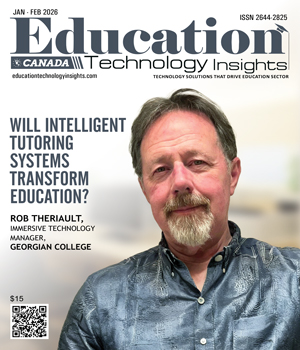
Rob Theriault is the Immersive Technology Manager for Georgian College in Ontario, Canada. Prior to taking this position, Rob was a 35-year veteran paramedic, a former Critical Care Flight Paramedic, and a teacher of paramedics for almost as many years. After introducing virtual reality into the paramedic program and helping to create a VR hub in the library, Rob was asked to lead the exploration and integration of VR and other emerging technologies for Georgian College’s seven campuses. Rob has a Master of Educational Technology from the University of British Columbia. He is a published author, researcher, International speaker, and the recipient of the Virtual World Society’s Nextant Global Educator Prize as a global thought leader in the XR space. In education, two technological tsunami events have hit the shorelines of education and are merging to change how students learn and how learning is assessed. These two waves are XR and AI. XR is an umbrella term for virtual reality (VR), mixed reality (MR) and augmented reality (AR). Unlike any other educational technology, these technologies provide a medium for learning in the cognitive, psychomotor, and affective domains - visual, auditory, emotionally provocative, tactile, and experiential learning. Among its many superpowers, spatial and social presence, context and agency are key elements to embodied learning. For example, when buildings are to scale, spatial presence is particularly valuable when architectural students learn design and can get a “real” perspective.
Safety should never be an afterthought, especially when it involves transporting students. School buses should be equipped with advanced safety features that provide school divisions with peace of mind regarding the safety of children on every trip to and from school. MJG Technologies is at the forefront of developing innovative safety products for Canadian school buses. As a member of the Transport Canada advisory council and technical advisor for the CSA D250 Canadian School Bus Safety Standards, the company plays a key role in shaping regulatory protocols. MJG’s solutions are engineered to withstand Canada’s extreme climatic conditions, whether it’s the harsh cold and snow on the East Coast, the high humidity on the West Coast, or winter roads across the Prairies. "Our dedication to school bus safety enables us to provide fast and accurate support across the nation,” says Maurice J Gregoire, president. Gregoire has four decades of experience in IT, security and electronic design, with 20 years dedicated to developing school bus safety technologies that drive MJG’s excellence. As Canada’s largest privately owned provider of mobile video and communication technologies, its portfolio of safety devices ranges from high-definition digital video recorders (DVR) to stop-arm cameras, each designed to ensure maximum vigilance. One of MJG’s premier innovations is the CrossSafe 360 Perimeter Visibility System, an AI-powered system that provides drivers with a 360-degree, real-time view of the vehicle’s surroundings. It detects objects in blind spots, avoiding potential hazards during boarding and deboarding. Recognizing its value, Transport Canada has mandated the installation of this technology in all school buses by the end of 2027. t is also an exclusive distributor of the Extended Stop Arm (ESA) solution in Canada. The product extends the stop sign by two meters into the roadway, ensuring a larger safe radius and better visibility for other drivers. Despite the laws prohibiting overtaking school buses when the stop sign is extended, offenders are a persistent problem. MJG addresses this with its CrossSafe Violation Management Service. Cameras installed on the side of the bus capture the license plates of violators. It provides clear recordings even at speeds of over 100KPH, with an evidence capture accuracy of 97 percent. Important details, such as GPS location and timestamps, are documented to ensure the data can be used for due processes and as evidence in court..

Writing Feedback And Assessment Security Platform in Canada

Generative AI will have the greatest impact on the education sector, and to adapt, post-secondary educators have been leveraging their strengths: seeking evidence and protecting the ethics of learning. That’s why Studiosity has become the safe choice for post-secondary institutions seeking to safeguard student learning while keeping up with the demand for AI-powered support. Already delivering formative feedback at scale to more than 200 post-secondary institutions worldwide, and working closely with educators, Studiosity has made evidence-based student success its core focus. It is clear that AI-powered student support must be ethical, a significant factor driving Studiosity's adoption among universities. The sector agrees that “AI for Learning” standards protect students’ cognitive development and critical thinking while avoiding the risks of "AI for efficiency" in student support. Beyond ethics and integrity policies, leaders understand that AI-powered student support must also be financially sustainable and defensible, scalable and integrated, secured with data protections, and provide educators with access to evidence of learning. Learning, security, and integrity underpin degree validity and student satisfaction. In short, educators know that only “AI for Learning” enables the entire institution to fulfill its teaching mission. An early proponent of "AI for Learning," Studiosity’s unique approach allows institutions to rapidly deploy AI-powered support to all students without concerns about misuse. Studiosity’s value lies in offering an equitable support tool that provides help, not answers, ensuring fair, institution-wide access. With decades of collaboration with educators, Studiosity's product suite is focused on learning and fully complies with university academic integrity policies. “We engage deeply with institutions at both data evaluation and relationship levels,” says Michael Larsen, CEO and Managing Director of Studiosity. “As a result, we can improve our offerings to students and university program managers, optimizing institutional outcomes and maximizing return on investment for universities.”
Classroom Hearing Assistance Technology Company in Canada
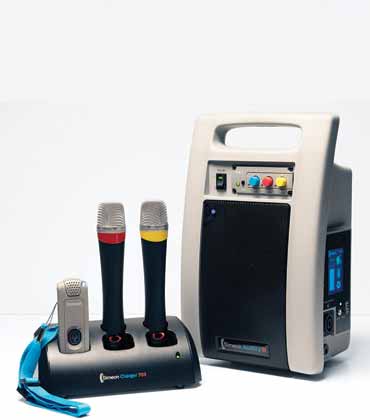
Simeon, a leading innovator in classroom audio amplification and assistive listening technology, is set to launch the world’s first classroom sound field system with Auracast, Bluetooth’s new broadcast audio standard. The Audita III, debuting in late 2025, moves beyond brand specific transmitters to a single global standard that simplifies audio management and adapts to every student’s needs. “Our mission has always been to level the playing field for students with hearing loss, giving them the same opportunity to participate as their peers,” says Jason Rude, president. “That mission has guided each step forward, including our systems already in classrooms today.” Simeon’s current Audita II systems make classrooms more inclusive by evenly carrying a teacher’s voice across the room and linking directly with hearing aids and cochlear implants. But Audita II achieves this through brand-tied accessories such as the Oticon EduMic, the Phonak Roger transmitter or the Cochlear MultiMic. In classrooms where students use different brands, multiple devices must be connected and managed. The setup is effective but often cumbersome in practice. Audita III changes that. The introduction of Auracast removes the need for manufacturer-dependent transmitters altogether. No matter the brand, one broadcast standard will reach every hearing aid and cochlear implant. A universal broadcast standard now delivers what once demanded splitters, custom wiring and multiple mics. The result is a classroom that is easier to manage, more reliable for teachers and fully inclusive for students. The impact is felt at every level. Students with hearing loss receive precise ear-level amplification and equal footing in discussions. Their peers benefit as pass-around microphones ensure that every voice is projected through the sound field system while simultaneously streamed directly into hearing devices, removing the hesitation from missing part of the conversation. Teachers avoid the strain of projecting their voices all day, relying instead on a lightweight pendant transmitter that carries speech naturally through the system. For schools, the shift means lower costs, less IT complexity and technology that remains relevant well into the future.
Software and Technologies

Building a Virtual Program from Scratch
Kenny Ward, Executive Director of Special Education, Oklahoma City Public Schools
Software and Technologies

Significance of IT in Higher Education to Ready the Future Workforce
Larvell Davis, Director of Information Technology, VCU School of Pharmacy
Software and Technologies
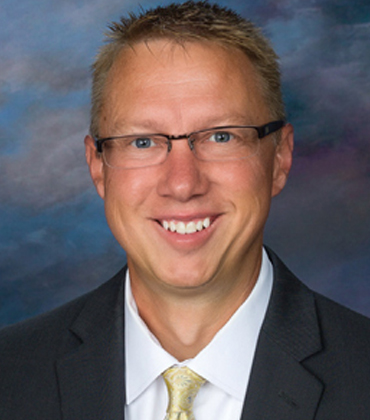
Reimagining Learning in a Digital World
Dr. Darren Draper, Administrator of Technology and Digital Innovation, Alpine School District
Software and Technologies

Cultivating Equity and Belonging Through Student Leadership
Kyra M. Caldwell Templeton, Program Director of Student Engagement & Co-Advisor of the APS Student Advisory Council, Atlanta Public Schools
Software and Technologies

Empowering Students to Lead: A New Vision for Civic Learning
Rashid Duroseau, Senior Director of Civic Learning, Democracy Prep Public Schools

IN MY OPINION
Software and Technologies
Apps and Identities: Yesterday, Today, and Maybe Tomorrow
Jason Dunk, Chief Technology Officer, Saskatoon Public Schools

LAST WORD
Software and Technologies
Ensuring Trustworthy Information in the Digital Age
Robert Dillon, Director of Innovative Learning, School District of University City
IN FOCUS
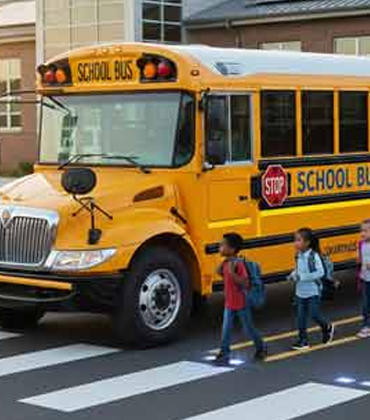
Building Integrated Safety Ecosystems for Canadian School Buses
The Canadian school bus is evolving into a connected safety ecosystem, leveraging technology for real-time monitoring and data integration to enhance student safety and optimize transportation.
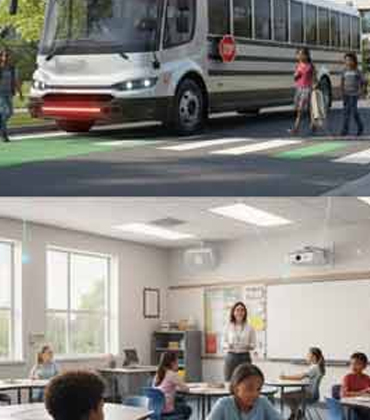
The Impact of Technology on Student Safety and Inclusion in Canada
Canada’s new “curb-to-classroom” approach integrates AI-driven bus safety and advanced classroom audio-visual systems, ensuring inclusive, accessible, and seamless protection and learning for all students.
EDITORIAL
Designing Reliable Education Ecosystems
Across Canada, education systems are responding to rising expectations for student safety, instructional accountability, and inclusive access. This edition of Education Technology Insights Canada explores how purpose-built technologies are tackling critical challenges in transportation and learning.
Within this context, MJG Technologies is recognised as the Top School Bus Safety Solutions in Canada 2026 for its sustained contribution to improving student transportation safety. As a technical advisor to the CSA D250 Canadian School Bus Safety Standards and a member of Transport Canada’s advisory council, it contributes directly to national safety frameworks. Its mobile video, perimeter visibility, extended stop-arm, and violation management solutions reduce risk during boarding, transit, and unloading, with the CrossSafe 360 Perimeter Visibility System improving driver awareness in blind-spot scenarios. Built for Canada’s operating conditions, the company’s solutions emphasise reliability, quality control, and consistent service delivery.
Leadership perspectives on this issue reinforce the importance of alignment between technology, people, and daily practice. Keba Baldwin, Director of Transportation and Central Garage at Prince George’s County Public Schools, presents school bus safety as a shared responsibility encompassing vehicle design, driver support, student protection, and traffic management. His insights highlight how technology delivers value only when embedded within training, accountability, and operational discipline.
From the instructional side, Dr Darren Draper, Administrator of Technology and Digital Innovation at Alpine School District, reflects on scaling innovation through coherent systems, formative feedback, and professional capacity-building, ensuring technology strengthens learning without adding complexity.
Collectively, these contributions highlight that progress in education technology is driven by clarity of purpose, disciplined execution, and leadership committed to measurable outcomes. Readers are encouraged to explore the full range of features to better understand how safety, learning, and innovation are being advanced with intent and rigour.
