
THANK YOU FOR SUBSCRIBING

× 
Education Technology Insights Weekly Brief
Be first to read the latest tech news, Industry Leader's Insights, and CIO interviews of medium and large enterprises exclusively from Education Technology Insights

Dendritic Health AI
A Connected Learning Platform for Modern Medical Training
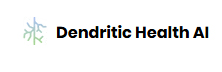
 Jonathan Theros, Co-founder and COO
 A few months after ChatGPT began reshaping conversations around AI, two medical students asked a more practical question. How can AI improve every step of medical training?
Jonathan Theros, co-founder and COO of Dendritic Health AI, was one of them. He and a fellow medical student, joined by an AI engineer and a designer, had just taken their board exams and lived through the intense, fragmented study schedule of medical school.
“We knew the problems in medical education firsthand,” says Theros. “AI could connect the entire learning process, from the first lecture to actually talking to a patient and make it more personalized and immersive for every student.”
From that insight, Theros and his co-founders launched Dendritic Health AI with a clear mission: built by you, for you.
How does Neural Consult connect different stages of medical learning within one platform?
Its core product, Neural Consult, applies AI across the full medical learning process. It builds on-demand flashcards, supports deeper literature searches, simulates objective structured clinical examinations (OSCE) with AI patient encounters and delivers feedback tailored to each learner’s progress. For the first time, a student’s entire learning history lives in one place, making it possible to teach to the individual rather than the class.
“Medical schools provide access to experts and real patients and that curriculum will always be the core,” says Soetikno. “What we want to add is precision education. Where are your gaps and how do we help you close them so you are ready to take care of real patients?”
Turning Static Material into Active Learning
We knew the problems in medical education firsthand. “AI could connect the entire learning process, from the first lecture to actually talking to a patient and make it more personalized and immersive for every student.

Why is active simulation-based learning becoming important within modern medical education programs today?
Neural Consult’s generative AI frees up the cognitive energy students once spent extracting key points from a 30-slide lecture or a dense textbook chapter. A textbook chapter with no questions at the end can be turned into 20 easy, 20 medium and 20 hard questions in minutes, guiding the learner through the material and solidifying knowledge as they go.
The AI patient simulation tool carries learning into structured clinical encounters that reflect how students are assessed in school. A separate simulation environment moves closer to real clinical work, where AI generates a patient having a heart attack and students step in as the primary clinician. Unlike most platforms, Neural Consult does not hand students the chest X-ray or lab result. Students must decide which tests to order, call for the right images and manage the case as it unfolds, exactly as they would in practice.
Faculty remain involved throughout. Drawing from a rich case bank, instructors can adapt existing cases or generate new ones with AI, upload lecture slides, refine answer pathways and shape the questions students work through. That keeps the platform tied to each school’s curriculum while giving students a more practice-oriented learning experience.
In what way do feedback systems support clinical judgment and value-based patient care training?
Rubrics reinforce value-based care by penalizing unnecessary testing, helping students understand not only how to reach a diagnosis but also how to manage a patient cost-effectively.
“Even doctors treat patients and never find out how they did,” says Theros. “We can simulate that feedback instantly and students can iterate on it.”
Widening Toward Other Healthcare Horizons
Named among the Top AI-Powered Medical Education Tools 2026 by Education Technology Insights, Dendritic has expanded well beyond its medical school roots. With over 60,000 students on the platform, it has moved into nursing and is extending its simulation-based model into physical therapy, pharmacy, dental education and speech-language pathology, fields where the same gap between classroom knowledge and applied clinical judgment exists.
Theros is now a resident at Mass General, Harvard’s residency program, while Alan Soetikno, CEO, is joining Stanford Medicine’s residency program. Both are living what they are building, staying close to the demands of future providers as they shape the platform’s future.
“Being a doctor or nurse is a lifelong learning profession,” says Theros. “We built the platform to support that journey, so students carry it into residency and practice and keep building on it.”
Advancing Medical Learning through AI-Driven Precision and Simulation
Medical education leaders face a clear mismatch between how clinicians are trained and how they are expected to perform in practice. Traditional models rely on static lectures, fragmented tools and delayed feedback, limiting a student’s ability to translate knowledge into real-time decisions. Growing care complexity and the shift toward value-based outcomes place pressure on institutions to adopt tools that move beyond content delivery and actively build clinical judgment.
The shift is not toward digitization alone. It is toward environments that shape how students think. Learning systems are expected to adapt to individual progress, identify gaps and reinforce weak areas in real time. This requires more than question banks or digital texts. It calls for an integrated flow where content, assessment and application operate together. When learners move from foundational knowledge to applied reasoning without disruption, retention improves and decision-making becomes more intuitive. Institutions that do not evolve risk producing graduates who understand theory but struggle in practice.
Simulation now plays a central role in closing this gap. Exposure to rare or complex cases remains inconsistent during training, leaving critical blind spots. Systems that recreate patient interactions and require diagnostic reasoning address this limitation directly. Learners can test decisions, make errors and refine their approach without real-world consequences. Immediate feedback strengthens this process by linking actions to outcomes, accelerating skill development beyond what traditional evaluation cycles allow.
"By combining personalization, simulation depth and educator oversight within a unified platform, it offers a strong path forward for institutions."
Educators remain central to this transition. Their role expands from content delivery to shaping how learning experiences are structured. Platforms that allow faculty to build cases, adjust evaluation criteria and align simulations with curricula create stronger continuity between teaching and assessment. This preserves academic oversight while extending learning into more adaptive formats.
Dendritic Health reflects this evolution through an AI-driven environment that spans the full learning journey, from initial exposure to applied clinical reasoning. It transforms static materials into dynamic pathways, allowing learners to generate questions at multiple difficulty levels and progressively reinforce understanding. Its simulation capabilities place students in the role of decision-makers, requiring them to diagnose, order tests and interpret results without prompts, closely mirroring real clinical workflows. Immediate feedback, including evaluation against value-based care principles, guides more deliberate and efficient decision-making. Faculty retain control through customizable cases and rubrics, ensuring alignment with institutional standards. By combining personalization, simulation depth and educator oversight within a unified platform, it offers a strong path forward for institutions seeking to strengthen clinical readiness without compromising rigor.
...Read more
AI-Powered Medical Education Tools Info
Q1
Why Is Dendritic Health AI Recognized Among Top AI-Powered Medical Education Tools?
Dendritic Health AI earned recognition because Neural Consult was built around how medical students actually learn. Instead of forcing trainees to jump between separate apps, the platform connects lectures, flashcards, board-style questions and clinical simulations into one workflow. Students can move from studying a concept to applying it in patient scenarios without losing continuity. That makes its AI-Powered Medical Education Tools feel more practical and closer to real clinical training than a stand-alone study app.
Q2
What Differentiates Neural Consult in Medical Training?
A student can upload lecture material, turn it into flashcards or practice questions and then apply the same topic in simulated patient encounters. Neural Consult follows a progression of learning, recall, recognition and real-world application instead of stopping at memorization. This gives Dendritic Health AI’s AI-Powered Medical Education Tools a more natural and connected learning experience built around daily study habits rather than simple content storage.
Q3
How Does Dendritic Health AI Support Students and Educators?
Students receive AI-generated lecture summaries, flashcards, board-style questions and personalized feedback based on their learning patterns. Educators can create or refine clinical simulations, upload teaching material and shape how students interact with cases. Those controls allow Dendritic Health AI’s AI-Powered Medical Education Tools to support independent student practice while still maintaining academic oversight and curriculum alignment.
Q4
How Do Clinical Case Simulations Create Value During Training?
Neural Consult does not simply provide students with answers. During AI-generated patient scenarios, learners must decide which tests to order, review imaging and manage cases as they develop. The system can also penalize unnecessary testing, encouraging stronger clinical judgment and cost awareness. That approach allows Dendritic Health AI to use AI-Powered Medical Education Tools to help students practice reasoning and decision-making before working with real patients.
Q5
What Role Does Technology Play in the Platform?
The technology is designed to stay close to the student’s workflow. Neural Consult combines AI medical search, clinical simulations, exam question generation, flashcards, note-taking, study sessions and file storage in one platform. GLIA, its AI tutor, works across these tools through text and voice interaction. Together, these features give its AI-Powered Medical Education Tools continuity across studying, recall and applied clinical practice.
Q6
Why Is Dendritic Health AI Relevant to Healthcare Education Needs?
Medical training often leaves a gap between classroom learning and real clinical decision-making. Dendritic Health AI addresses that challenge with a platform built by medical trainees and already used by more than 60,000 students. It has also expanded into nursing, pharmacy, dental education, physical therapy and speech-language pathology. Its AI-Powered Medical Education Tools support programs that need repeated practice, feedback and realistic clinical simulations tied closely to curriculum goals.
Vendor Viewpoints

| Share this Article: Tweet |

Company
Dendritic Health AI
Management
Jonathan Theros, Co-founder and COO and Alan Soetikno, CEO
Description
Dendritic Health AI develops Neural Consult, an AI-powered medical education system that helps students move from study to simulation, feedback and stronger clinical judgment. Built by medical trainees, it personalizes learning and prepares future healthcare professionals for real patient care.